Wood, a global leader in consulting and engineering, has been awarded a Front-End Engineering Design (FEED) contract for cleaner, increased fuel production at the Dung Quat Oil Refinery in Quang Ngai Province, Central Vietnam.
Under this contract with Binh Son Refining and Petrochemical Joint Stock Company (BSR), Wood will upgrade and expand the state-owned refinery to increase throughput and ensure fuels comply with Euro V specifications. This will ultimately reduce emissions, meeting environmental regulations, enhancing Vietnam’s energy security and protecting air quality.
The expansion and upgrade of Dung Quat, due to be completed by 2028, is part of Vietnam’s long-term strategy to become fully self-sufficient in industrial and transport fuels, reduce fuel imports and ensure the country’s future security of supply.
Henry Ling, Senior Vice President, Projects at Wood, commented: “Wood has supported BSR for over 30 years and we are honoured to be trusted to deliver this important project. Once expansion is complete, this refinery will help bridge the gap between supply and demand for refined products in the domestic market.
“This award is testament to our proven track record of delivering complex refinery expansions and the capabilities of our global process specialists. Wood’s team in Thailand will deliver the FEED scope with specialist support from Singapore and Reading on technology selection, licensing, processing and advisory.
Thursday, 31 October 2024

Monday, 30 September 2024
Yulong Island Refining and Chemical Integration Project, Shandong's Biggest Single Investment Project, Officially Launched
In the morning of September 25,the second batch of equipment for Phase I of the Yulong Island Refining and Chemical Integration Project commenced commissioning, marking a significant milestone in the structural adjustment, transformation, and upgrading of Shandong’s petrochemical industry.
As a major national productivity layout project and the industrial initiative with the biggest investment in Shandong Province in recent years, the Yulong Island Refining and Chemical Integration Project is a key component of China's"14th Five-Year Plan". Phase I includes two production lines with capacities of 20 million t/a oil refining, three million t/a ethylene, and three million t/a mixed xylenes. Launched in October 2020 with a total investment of RMB 116.8 billion, the project consolidates 26.96 million tons of decentralized refining capacity in Shandong, reducing coal consumption by 750,000 tons and carbon dioxide emissions by four to five million tons annually. This project builds a complete industrial chain of oil refining and chemical industries to achieve whole-process high-value utilization of crude oil, with the objective of establishing a"domestically leading,world-class",high-end, green, and smart petrochemical industry base.
Since the project commenced in October 2020,Nanshan Group has shouldered the responsibility of project implementation, under the directives and deployments of the CPC Shandong Provincial Committee,the Shandong Provincial People's Government,and the CPC Yantai Municipal Committee, and Yantai Municipal People's Government. The company has actively fulfilled the responsibilities and obligations of a major shareholder,built consensus, acted in unison, strictly toed the red line of "work safety" and the bottom line of "ecological and environmental protection ",and adhered to the principles of" quality first, efficiency foremost, and standardized management", achieving significant progress in Phase I.
As a landmark project for the province's replacement of old growth drivers with new ones, the Yulong Island Refining and Chemical Integration Project has many characteristics and advantages, including reduced capacity replacement, flexible process design, independent equipment innovation, the production of high-end and low-carbon products, and the implementation of a mixed ownership system. The project serves as a shining role model for the transformation and upgrading of the petrochemical industry. To date, Phase I has seen an investment of RMB 115.95 billion, with an expected annual sales revenue of RMB 116.6 billion upon designed capacity.
Moving forward,the Yulong Island Refining and Chemical Integration Project will adhere to the highest standards in planning,positioning,construction quality,technical products,advancement speed,support,and guarantees.The project will set high benchmarks, implement scientific planning,develop in a staggered manner with the seven major domestic petrochemical industrial bases,aspire to international prominence,enhance investment attraction in the industrial chain,develop downstream products such as new chemical materials, and establish a "domestically leading, world-class", high-end, green,and smart petrochemical industry base.
As a major national productivity layout project and the industrial initiative with the biggest investment in Shandong Province in recent years, the Yulong Island Refining and Chemical Integration Project is a key component of China's"14th Five-Year Plan". Phase I includes two production lines with capacities of 20 million t/a oil refining, three million t/a ethylene, and three million t/a mixed xylenes. Launched in October 2020 with a total investment of RMB 116.8 billion, the project consolidates 26.96 million tons of decentralized refining capacity in Shandong, reducing coal consumption by 750,000 tons and carbon dioxide emissions by four to five million tons annually. This project builds a complete industrial chain of oil refining and chemical industries to achieve whole-process high-value utilization of crude oil, with the objective of establishing a"domestically leading,world-class",high-end, green, and smart petrochemical industry base.
Since the project commenced in October 2020,Nanshan Group has shouldered the responsibility of project implementation, under the directives and deployments of the CPC Shandong Provincial Committee,the Shandong Provincial People's Government,and the CPC Yantai Municipal Committee, and Yantai Municipal People's Government. The company has actively fulfilled the responsibilities and obligations of a major shareholder,built consensus, acted in unison, strictly toed the red line of "work safety" and the bottom line of "ecological and environmental protection ",and adhered to the principles of" quality first, efficiency foremost, and standardized management", achieving significant progress in Phase I.
As a landmark project for the province's replacement of old growth drivers with new ones, the Yulong Island Refining and Chemical Integration Project has many characteristics and advantages, including reduced capacity replacement, flexible process design, independent equipment innovation, the production of high-end and low-carbon products, and the implementation of a mixed ownership system. The project serves as a shining role model for the transformation and upgrading of the petrochemical industry. To date, Phase I has seen an investment of RMB 115.95 billion, with an expected annual sales revenue of RMB 116.6 billion upon designed capacity.
Moving forward,the Yulong Island Refining and Chemical Integration Project will adhere to the highest standards in planning,positioning,construction quality,technical products,advancement speed,support,and guarantees.The project will set high benchmarks, implement scientific planning,develop in a staggered manner with the seven major domestic petrochemical industrial bases,aspire to international prominence,enhance investment attraction in the industrial chain,develop downstream products such as new chemical materials, and establish a "domestically leading, world-class", high-end, green,and smart petrochemical industry base.
Wednesday, 14 August 2024
Gunvor acquires TotalEnergies shares in Total Parco in Pakistan
Gunvor Group, a leading global commodities trading company, has signed an agreement to purchase TotalEnergies’ 50% stake in Total PARCO Pakistan Limited (TPPL).
TPPL is a 50/50 joint venture between TotalEnergies Marketing and Services and Pak-Arab Refinery Limited (PARCO) in Pakistan with a retail network of more than 800 service stations, fuel logistics, and lubricants activities.
The new entity will continue its retail business under the existing “Total Parco” brand, and its lubricants business under the “Total” brand in Pakistan, continuing to serve its customers.
The acquisition remains subject to authorization by the relevant authorities and related agreements.
TPPL is a 50/50 joint venture between TotalEnergies Marketing and Services and Pak-Arab Refinery Limited (PARCO) in Pakistan with a retail network of more than 800 service stations, fuel logistics, and lubricants activities.
The new entity will continue its retail business under the existing “Total Parco” brand, and its lubricants business under the “Total” brand in Pakistan, continuing to serve its customers.
The acquisition remains subject to authorization by the relevant authorities and related agreements.
Tuesday, 30 April 2024
Renewable Fuels Project in Canada Begins Production
A Fluor Corporation (NYSE: FLR) project reached a major milestone recently with the production startup of the Braya Renewable Fuels facility in Come by Chance, Newfoundland and Labrador, Canada. Fluor provided engineering and procurement (EP) services to convert the idled petroleum refinery into a modern facility that produces renewable diesel fuel from soybean oil and other low carbon intensity feedstocks.
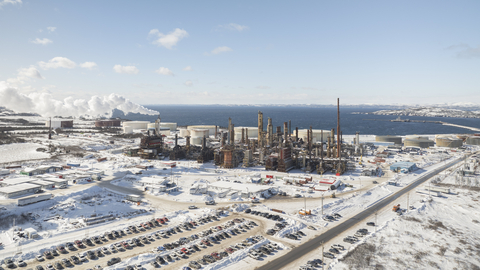
“The transformation of this facility into a sustainable asset improves Canada’s global climate impact by supporting the decarbonization of hard-to-abate sectors such as heavy-duty transportation and aviation,” said Jason Kraynek, President of Fluor’s Production & Fuels business. “Fluor was proud to be part of this exciting renewable fuels project and I commend the Braya team for its safe startup.”
In addition to EP services, Fluor provided construction support services through startup.
Friday, 12 April 2024
Rhône Energies has entered into exclusive negotiations for the acquisition of the Esso Fos-sur-Mer refinery in southern France
Rhône Energies, a consortium of Entara LLC (“Entara”) and Trafigura Pte Ltd (“Trafigura”), has entered into exclusive negotiations to acquire the Fos-sur-Mer refinery and the Toulouse and Villette de Vienne terminals from Esso. The proposed acquisition is subject to a formal information and consultation procedure with employee representative bodies. Its completion is subject to regulatory approvals and is expected by the end of 2024. The financial terms of the proposed transaction are confidential.
Rhône Energies was formed by Entara and Trafigura to combine the strengths of a proven refinery operator with a global market leader in energy and commodities. Entara was established by former executives of Crossbridge Energy who have a track record of managing and optimising refinery assets, including at the Fredericia refinery in Denmark. Entara will manage the Fos-sur-Mer asset, overseeing operations, maintenance, asset integrity, commercial, health, safety and environmental performance.
Trafigura is one of the world’s largest suppliers of energy and commodities, operating in over 150 countries and trading over 5.5 million barrels of oil and petroleum products every day. Trafigura has a 30-year history of working with refineries through direct investment, capacity utilization and supply and offtake.
“We would be delighted to acquire and assume stewardship of the Esso’s Fos-sur-Mer refinery operations and look forward to engaging with the operational management, employee representatives and government stakeholders over the coming weeks and months to confirm our commitment to the operation and our plans for the future,” said Entara’s CEO, Nicholas Myerson. “We are committed to upholding the operation’s high standards of environmental responsibility, safety, and operational excellence.”
“The Fos-sur-Mer refinery is an efficient, flexible, well-run operation strategically located on France’s Mediterranean coast,” said Ben Luckock, Global Head of Oil for Trafigura. “The refinery will continue to be an important contributor to energy security in the region and would benefit from Trafigura’s global trading and logistics network. Oil and petroleum products will continue to play an important role in supporting growing global energy demand during the transition currently underway to a low-carbon economy.”
Rhône Energies intends to maintain the current workforce with approximately 310 members of staff who will transfer to Rhône Energies on completion of the proposed transaction. The company would also aim to maintain a competitive compensation and benefits programme for the workforce as well as learning and development opportunities.
Under the terms of the proposed acquisition, Trafigura would enter into a minimum 10-year exclusive crude oil supply and product offtake agreement, including ownership of crude oil and product stocks in tank. These agreements would ensure the refinery has a secure supply of on-demand feedstock at competitive costs, and a reliable off-taker of refined products destined to the domestic market. Rhône Energies would agree to continue to supply Esso SAF in the region.
With this proposed acquisition, Rhône Energies plans to capitalize on the refinery’s existing skilled teams and strong manufacturing performance. The company aims to further improve margin capture, crude flexibility, process utilization and to maximize high value products, while investing in personnel and process safety.
Rhône Energies intends to invest in the sustainability of the site to reduce its carbon intensity footprint while also investing in growth projects enabling further co-processing of biogenic feedstocks to produce renewable fuels.
With a crude oil processing capacity of 140 thousand barrels per day, Fos-sur-Mer benefits from direct access to a major port, competitive operating costs and the ability to process a wide range of crude oil feedstocks.
Rhône Energies was formed by Entara and Trafigura to combine the strengths of a proven refinery operator with a global market leader in energy and commodities. Entara was established by former executives of Crossbridge Energy who have a track record of managing and optimising refinery assets, including at the Fredericia refinery in Denmark. Entara will manage the Fos-sur-Mer asset, overseeing operations, maintenance, asset integrity, commercial, health, safety and environmental performance.
Trafigura is one of the world’s largest suppliers of energy and commodities, operating in over 150 countries and trading over 5.5 million barrels of oil and petroleum products every day. Trafigura has a 30-year history of working with refineries through direct investment, capacity utilization and supply and offtake.
“We would be delighted to acquire and assume stewardship of the Esso’s Fos-sur-Mer refinery operations and look forward to engaging with the operational management, employee representatives and government stakeholders over the coming weeks and months to confirm our commitment to the operation and our plans for the future,” said Entara’s CEO, Nicholas Myerson. “We are committed to upholding the operation’s high standards of environmental responsibility, safety, and operational excellence.”
“The Fos-sur-Mer refinery is an efficient, flexible, well-run operation strategically located on France’s Mediterranean coast,” said Ben Luckock, Global Head of Oil for Trafigura. “The refinery will continue to be an important contributor to energy security in the region and would benefit from Trafigura’s global trading and logistics network. Oil and petroleum products will continue to play an important role in supporting growing global energy demand during the transition currently underway to a low-carbon economy.”
Rhône Energies intends to maintain the current workforce with approximately 310 members of staff who will transfer to Rhône Energies on completion of the proposed transaction. The company would also aim to maintain a competitive compensation and benefits programme for the workforce as well as learning and development opportunities.
Under the terms of the proposed acquisition, Trafigura would enter into a minimum 10-year exclusive crude oil supply and product offtake agreement, including ownership of crude oil and product stocks in tank. These agreements would ensure the refinery has a secure supply of on-demand feedstock at competitive costs, and a reliable off-taker of refined products destined to the domestic market. Rhône Energies would agree to continue to supply Esso SAF in the region.
With this proposed acquisition, Rhône Energies plans to capitalize on the refinery’s existing skilled teams and strong manufacturing performance. The company aims to further improve margin capture, crude flexibility, process utilization and to maximize high value products, while investing in personnel and process safety.
Rhône Energies intends to invest in the sustainability of the site to reduce its carbon intensity footprint while also investing in growth projects enabling further co-processing of biogenic feedstocks to produce renewable fuels.
With a crude oil processing capacity of 140 thousand barrels per day, Fos-sur-Mer benefits from direct access to a major port, competitive operating costs and the ability to process a wide range of crude oil feedstocks.
Thursday, 14 March 2024
KBR Awarded Project Management Contract for Sonangol’s New Lobito Refinery Project
KBR announced today it has been awarded a project management contract by Sonangol for the design and construction of a new 200,000bpd refinery in Lobito, Angola.
Under the terms of the contract, KBR will provide services encompassing the project management of engineering, procurement and construction phase execution. The Lobito Refinery Project is one of the most significant energy infrastructure projects in the region and will contribute to Angola’s energy independence. The project will also contribute to significant job creation and economic development of this region. Upon completing the Lobito Refinery Project, Angola is expected to have a 200% increase in the capacity to produce fuel products within the country in an efficient and sustainably improved approach.
This award further extends the more than twenty-year long partnership between KBR and Sonangol in the development of essential natural resources in Angola. KBR completed the FEED phase of the project earlier in 2023, providing a cost competitive design that met Sonangol’s business objectives while meeting the advanced emission standards required in the industry. In line with our strategy in energy transition to provide more environmentally friendly solutions, KBR’s FEED design also meets 2030 African and European Product Specifications with river water consumption and waste-water treatment requirements reduced by 30% as a result of KBR’s innovation in the refinery’s cooling system design.
“We are excited to be a part of this important project and to continue to grow and maintain a substantial presence in the region,” said Jay Ibrahim, President, Sustainable Technology Solutions. “This win is indicative of KBR’s strategic commitment to offer differentiated technical services that support Angola’s sustainable development goals.”
For more than 100 years, KBR has provided holistic and value-added solutions across the entire asset life cycle. Our leading experts have helped design and deliver world-class refinery and petrochemical plants across the globe.
Under the terms of the contract, KBR will provide services encompassing the project management of engineering, procurement and construction phase execution. The Lobito Refinery Project is one of the most significant energy infrastructure projects in the region and will contribute to Angola’s energy independence. The project will also contribute to significant job creation and economic development of this region. Upon completing the Lobito Refinery Project, Angola is expected to have a 200% increase in the capacity to produce fuel products within the country in an efficient and sustainably improved approach.
This award further extends the more than twenty-year long partnership between KBR and Sonangol in the development of essential natural resources in Angola. KBR completed the FEED phase of the project earlier in 2023, providing a cost competitive design that met Sonangol’s business objectives while meeting the advanced emission standards required in the industry. In line with our strategy in energy transition to provide more environmentally friendly solutions, KBR’s FEED design also meets 2030 African and European Product Specifications with river water consumption and waste-water treatment requirements reduced by 30% as a result of KBR’s innovation in the refinery’s cooling system design.
“We are excited to be a part of this important project and to continue to grow and maintain a substantial presence in the region,” said Jay Ibrahim, President, Sustainable Technology Solutions. “This win is indicative of KBR’s strategic commitment to offer differentiated technical services that support Angola’s sustainable development goals.”
For more than 100 years, KBR has provided holistic and value-added solutions across the entire asset life cycle. Our leading experts have helped design and deliver world-class refinery and petrochemical plants across the globe.
Wednesday, 6 March 2024
bp wants to reposition its refinery in Gelsenkirchen for the future
With its strategy for the German market, bp also wants to drive forward its transformation into an integrated energy company. The refinery in Gelsenkirchen is an important component of this project. By the end of the decade, bp plans to gradually renovate the site so that it can follow the path of the energy transition and exploit its potential.
Currently, our refinery site in Gelsenkirchen is not competitive. We are too complex and – not only because of this – burdened with structurally too high costs. In order to be able to take advantage of the opportunities that arise for our location from the energy transition, we have to change today. We want to give Gelsenkirchen a perspective and greater potential for its contributions to the energy transition.
Arno Appel, head of the refinery in Gelsenkirchen
Refinery: Perspectives through Change and Adaptation
- In order to make the refineries fit for the future, it is necessary to massively reduce the complexity of the site and to shut down plant components for which capacity utilization is expected to decline in the future – with petrochemical production remaining a core area.
- For this reason, as a first step, five plants at the Horst and Scholven plants are to be decommissioned as planned from 2025. This could lead to a planned and controlled reduction of the total production capacity – currently around twelve million tonnes of crude oil per year – to around eight million tonnes at the site.
- With these measures, the site could also reduce its Scope 1 emissions by up to one half a million tons of CO2 per year.
- In addition, subject to appropriate approvals, bp plans to enable the production of lower-emission fuels through co-processing at the hydrocracker plant at the Gelsenkirchen-Scholven site, in order to produce, among other things, more sustainable aviation fuels (SAF).1
- Another perspective for future steps towards the production of more sustainable products is the possibility of establishing a circular economy network at the refinery for its petrochemical plants together with a partner. Only recently, the city council of Gelsenkirchen created the basic prerequisite for this by adapting the development plan accordingly.
About the Gelsenkirchen location:
With around 2,000 employees and 160 trainees, bp operates the two plants in Horst and Scholven in Gelsenkirchen as an integrated refinery and petrochemical site. The processing capacity is about twelve million tons of crude oil per year. In addition to gasoline, diesel, jet fuel and heating oil, this results in more than 50 different products, primarily for the chemical industry. In addition to its great importance for the domestic fuel and energy supply, the Gelsenkirchen site also plays an important role in the North Rhine-Westphalia Chemical Network.
Subscribe to:
Posts (Atom)