Friday, 28 March 2025

Petrobras expands RNEST's processing capacity with completion of Train 1 works

Petróleo Brasileiro S.A. – Petrobras reports that it has completed the modernization work on Train 1 of the Abreu e Lima Refinery (RNEST), located in the city of Ipojuca, in the state of Pernambuco. The renovation and expansion process (Revamp) received investments of approximately R$ 93 million and will expand the unit's processing capacity from 115,000 to 130,000 barrels of oil per day. 

This important milestone represents the completion of the production capacity expansions planned for the current Refining Train in operation, seeking better flow of light products and greater processing capacity for pre-salt oil. 

Among all Brazilian refineries, RNEST has the highest rate of conversion of crude oil into diesel (70%). With the completion of RNEST's scope (SNOX, Revamp Train 1 and Train 2), the refinery will have the capacity to process 260,000 barrels of oil per day, with an increase in national production of S-10 diesel of around 13 million liters per day. 

In December 2024, RNEST started up the SNOX unit, the first of its kind in Brazilian refining, responsible for reducing sulphur oxide (SOx) and nitrogen oxide (NOx) emissions, producing sulphuric acid, a new product marketed by the refinery, which contributes to preserving the environment. The acid produced, among other uses, is an important input for the treatment and generation of drinking water. 

The contracting process is underway for the completion of works on Train 2, which will add 130,000 bpd of capacity to RNEST

Thursday, 13 March 2025

BP Europa SE to seek potential buyers for Ruhr Oel GmbH – BP Gelsenkirchen

BP Europa SE today announced its intention to market its Ruhr Oel GmbH – BP Gelsenkirchen operation in Germany for potential sale. Its assets include the bp refinery in Gelsenkirchen and DHC Solvent Chemie GmbH in Mülheim an der Ruhr.

The marketing process for a suitable buyer will begin immediately with sales agreements targeted for 2025. Assuming this is successful, timing for the completion of the sale and transfer of the company to a new owner will be subject to regulatory and governmental approvals. During the sales process, the refinery will continue to operate as usual.

Emma Delaney, EVP, customers & products said, “bp needs to continually manage its global portfolio as we position to grow as a simpler, more focused, higher-value company. After a thorough review, we have concluded that a new owner would be better suited for the site to take it forward. We are convinced that the refinery can unlock its full potential under new ownership.”

In recent years, bp has implemented numerous projects to modernize the infrastructure of the refinery in Gelsenkirchen. This includes, for example, renewing the power grid and establishing an independent steam supply. With initiatives like these, the site can meet the demands of modern refinery operations. The continued transformation of the site, initiated in 2024, aims to reduce the refinery’s complexity and processing capacity. Today, the refinery can process crude oils from around the world, produce high-quality fuels and also has the potential to manufacture biofuels and process recycled plastics.

Patrick Wendeler, chief executive of BP Europa SE, said, “With significant investments, we have been able to substantially modernize our site in recent years. Due to its current production capabilities and its location – in the heart of Europe and particularly within the chemical cluster of North Rhine-Westphalia – it offers significant potential to a new owner supported by a highly qualified team.”

Notes to editors
  • With a current workforce of around 2,000 employees and 160 apprentices, Ruhr Oel GmbH – BP Gelsenkirchen (ROG) operates the two plants in Horst and Scholven in Gelsenkirchen as an integrated refining and petrochemical site, as well as the Bottrop tank farm. The refinery has a processing capacity of around twelve million tonnes of crude oil per year. This is used to produce petrol, diesel, jet fuel and heating oil, as well as more than 50 other products, primarily for the chemical industry. In addition to its major importance for the domestic fuel and energy supply, the Gelsenkirchen site also plays a key role in the North Rhine-Westphalia chemical industry.

  • In addition, ROG is the sole owner of DHC Solvent Chemie GmbH and has a share in the Maatschap Europort Terminal (MET) in the Netherlands. It also holds shares in the N.V. Rotterdam-Rijn-Pijplining (RRP) crude oil and product pipeline and Nord-West Oelleitung GmbH (NWO) with its pipelines, crude oil tanks, tank farms and unloading points.

Tuesday, 31 December 2024

Chevron upgrades pasadena refinery to increase capacity, feedstock and product flexibility

Chevron U.S.A., Inc. (CUSA), a wholly owned subsidiary of Chevron Corporation (NYSE: CVX), has completed a retrofit of its refinery in Pasadena, Texas, which is expected to increase product flexibility and expand the processing capacity of lighter crudes by nearly 15 percent to 125,000 barrels per day.

Chevron acquired the Pasadena Refinery in 2019 with the strategic intent to expand its Gulf Coast refining system. This project is expected to allow the company to process more equity crude from the Permian Basin, supply more products to customers in the U.S. Gulf Coast and realize synergies with the company’s Pascagoula refinery.

The Light Tight Oil (LTO) Project aims to enhance facility reliability and safety and will ultimately result in an increase in the supply of refined products domestically. The refinery will also begin producing jet fuel and exporting gas oil.

“The Pasadena Refinery is on a journey to maximize value for Chevron and the community it serves by driving progress in safety and reliability,” said Chevron Manufacturing President Chris Cavote. “This refinery now firmly integrates our upstream and downstream businesses as we aim to optimize the value chain.”

Planning for the LTO Project began in 2019 with work beginning in early 2020.

“I’m extremely proud of our employee and contractor workforce, which logged over 4 million hours to complete this complex project in an operating refinery. Our safety program reinforced the focus on working safely throughout the project,” said Refinery General Manager Tifanie Steele. “We are investing in the refinery to help it be successful in the long-term, which we hope will support continuing positive economic impact to our community.”

The phased start-up of the asset is expected to last through Q1 of 2025 as project team members work to confirm all plants are operating as planned and products are developed to specification.

Saturday, 28 December 2024

Innovative Baker Hughes Emissions Abatement Solution Chosen to Reduce Routine Flaring at SOCAR’s Baku Oil Refinery

Baker Hughes (NASDAQ: BKR), an energy technology company, and SOCAR announced Thursday the signing of a contract for an integrated gas recovery and hydrogen sulfide (H2S) removal system that will significantly reduce downstream flaring at SOCAR’s Heydar Aliyev Oil Refinery in Baku, Azerbaijan. The contract was signed at COP29 in Baku, in the presence of Baker Hughes Chairman and CEO Lorenzo Simonelli and SOCAR President Rovshan Najaf.

Building on the pledges formalized by Azerbaijan’s entry into the Global Methane Pledge and the COP28 presidency’s Oil & Gas Decarbonization Charter (OGDC), the project is a tangible step toward ending routine flaring by 2030 at SOCAR’s site, using innovative applications of Baker Hughes' existing and field-proven emissions abatement technologies. The project is expected to recover flare gas equivalent up to 7 million Nm3 of methane per year, and further reduce CO2 emissions by up to 11,000 tons per year.

Baker Hughes will integrate its innovative gas recovery and H2S removal system into the refinery’s existing infrastructure to help abate methane and sulfur – two of the most potent greenhouse gas emissions – and remove hazardous H2S from the site. The system will also enable SOCAR to use the recovered gas, which would have previously been flared, as fuel for the refinery. This will reduce overall fuel gas consumption and operating costs at the refinery, creating new opportunities for value enhancement and efficiency gains.

“We must reduce emissions by 45% this decade to put us on the right path to reach net zero by 2050. The industry has an imperative to act now, and we can do it with existing technology solutions that can be deployed today,” said Baker Hughes Chairman and CEO Lorenzo Simonelli. “This award is a testament to our companies’ shared commitment to act on emissions abatement and represents another significant milestone in Baker Hughes’ journey to help customers drive more sustainable and efficient operations.”

“Our collaboration with Baker Hughes reflects SOCAR’s commitment to advancing sustainable operations and reducing emissions across our sites,” said Rovshan Najaf, president of SOCAR. “By launching this project, we are making a tangible impact on emissions abatement and setting a benchmark for environmental responsibility. This initiative aligns with our vision for a cleaner, more efficient energy future, supporting our commitment to climate goals.”

The project's rapid progression from concept to contract in only nine months demonstrates the two companies’ commitment to driving action and highlights the value achieved through close collaboration and early engagement. Project execution will begin immediately, with full commissioning targeted within 24 months.

This integrated gas recovery and H2S removal system is part of Baker Hughes’ broad portfolio of emissions abatement solutions capable of improving productivity, efficiency and delivering increased value at scale across customer operations.

Thursday, 31 October 2024

QatarEnergy enters 20-year naphtha supply agreement with Shell

QatarEnergy has announced entering into a long-term naphtha supply agreement with Singapore-based Shell International Eastern Trading Company (Shell).
The 20-year agreement stipulates the supply of up to 18 million tons of naphtha to be delivered to Shell starting in April 2025.

In remarks on this occasion, His Excellency Mr. Saad Sherida Al-Kaabi, the Minister of State for Energy Affairs, the President and CEO of QatarEnergy said: “We are delighted to sign QatarEnergy’s first 20-year naphtha sales agreement, the largest and longest to date. This is our second such agreement with Shell since 2019 and builds on our strategy of stronger relations with established end-users and partners.”

His Excellency Minister Al-Kaabi added: “Today’s signing further strengthens QatarEnergy’s relationship with Shell, which is not only a reliable naphtha off-taker but also a major counterpart and strategic partner. We look forward to building on our longstanding relationship with Shell and achieving greater mutual successes along the way.”

On his part, Mr. Wael Sawan, the CEO of Shell, said, “We are honored to enter into this long-term agreement with our esteemed partner, QatarEnergy. This deal will support Shell as we deliver more value for our customers worldwide. Today’s signing marks another significant milestone in our long-established partnership.”

QatarEnergy and Shell have a long-standing strategic partnership through several shared investments in the energy industry in Qatar and globally, including QatarEnergy LNG projects, the Pearl GTL Plant, and several other joint investments. 

The Naphtha will be supplied from the Ras Laffan Refinery

Phillips 66 provides notice of its plan to cease operations at Los Angeles-area refinery

Phillips 66 (NYSE: PSX) announced plans to cease operations at its Los Angeles-area refinery in the fourth quarter of 2025 and will work with the state of California to supply fuel markets and meet ongoing consumer demand.

“We understand this decision has an impact on our employees, contractors and the broader community,” said Mark Lashier, chairman and CEO of Phillips 66. “We will work to help and support them through this transition.” Approximately 600 employees and 300 contractors currently operate the Los Angeles-area refinery.

“With the long-term sustainability of our Los Angeles Refinery uncertain and affected by market dynamics, we are working with leading land development firms to evaluate the future use of our unique and strategically located properties near the Port of Los Angeles,” said Lashier. “Phillips 66 remains committed to serving California and will continue to take the necessary steps to meet our commercial and customer demands.”

As the California Energy Commission’s analysis has indicated, expanding supply capabilities will be critical. Phillips 66 supports these efforts and will work with California to maintain current levels and potentially increase supplies to meet consumer needs. The company will supply gasoline from sources inside and outside its refining network as well as renewable diesel and sustainable aviation fuels from its Rodeo Renewable Energy Complex in the San Francisco Bay area.

Phillips 66 has engaged Catellus Development Corporation and Deca Companies, two leading real estate development firms, to evaluate the future use of the 650-acre sites in Wilmington, California, and Carson, California. The firms bring strong track records of solving complex redevelopment challenges and will collaborate with Phillips 66 in an advisory role to advance potential commercial development options that support the regional economy and other key stakeholder objectives.

“These sites offer an opportunity to create a transformational project that can support the environment, generate economic development, create jobs and improve the region’s critical infrastructure,” Lashier said.

Wood to support cleaner, increased fuel production in Vietnam

Wood, a global leader in consulting and engineering, has been awarded a Front-End Engineering Design (FEED) contract for cleaner, increased fuel production at the Dung Quat Oil Refinery in Quang Ngai Province, Central Vietnam.

Under this contract with Binh Son Refining and Petrochemical Joint Stock Company (BSR), Wood will upgrade and expand the state-owned refinery to increase throughput and ensure fuels comply with Euro V specifications. This will ultimately reduce emissions, meeting environmental regulations, enhancing Vietnam’s energy security and protecting air quality.

The expansion and upgrade of Dung Quat, due to be completed by 2028, is part of Vietnam’s long-term strategy to become fully self-sufficient in industrial and transport fuels, reduce fuel imports and ensure the country’s future security of supply.

Henry Ling, Senior Vice President, Projects at Wood, commented: “Wood has supported BSR for over 30 years and we are honoured to be trusted to deliver this important project. Once expansion is complete, this refinery will help bridge the gap between supply and demand for refined products in the domestic market.

“This award is testament to our proven track record of delivering complex refinery expansions and the capabilities of our global process specialists. Wood’s team in Thailand will deliver the FEED scope with specialist support from Singapore and Reading on technology selection, licensing, processing and advisory.

Monday, 30 September 2024

Yulong Island Refining and Chemical Integration Project, Shandong's Biggest Single Investment Project, Officially Launched

In the morning of September 25,the second batch of equipment for Phase I of the Yulong Island Refining and Chemical Integration Project commenced commissioning, marking a significant milestone in the structural adjustment, transformation, and upgrading of Shandong’s petrochemical industry.

As a major national productivity layout project and the industrial initiative with the biggest investment in Shandong Province in recent years, the Yulong Island Refining and Chemical Integration Project is a key component of China's"14th Five-Year Plan". Phase I includes two production lines with capacities of 20 million t/a oil refining, three million t/a ethylene, and three million t/a mixed xylenes. Launched in October 2020 with a total investment of RMB 116.8 billion, the project consolidates 26.96 million tons of decentralized refining capacity in Shandong, reducing coal consumption by 750,000 tons and carbon dioxide emissions by four to five million tons annually. This project builds a complete industrial chain of oil refining and chemical industries to achieve whole-process high-value utilization of crude oil, with the objective of establishing a"domestically leading,world-class",high-end, green, and smart petrochemical industry base.

Since the project commenced in October 2020,Nanshan Group has shouldered the responsibility of project implementation, under the directives and deployments of the CPC Shandong Provincial Committee,the Shandong Provincial People's Government,and the CPC Yantai Municipal Committee, and Yantai Municipal People's Government. The company has actively fulfilled the responsibilities and obligations of a major shareholder,built consensus, acted in unison, strictly toed the red line of "work safety" and the bottom line of "ecological and environmental protection ",and adhered to the principles of" quality first, efficiency foremost, and standardized management", achieving significant progress in Phase I.

As a landmark project for the province's replacement of old growth drivers with new ones, the Yulong Island Refining and Chemical Integration Project has many characteristics and advantages, including reduced capacity replacement, flexible process design, independent equipment innovation, the production of high-end and low-carbon products, and the implementation of a mixed ownership system. The project serves as a shining role model for the transformation and upgrading of the petrochemical industry. To date, Phase I has seen an investment of RMB 115.95 billion, with an expected annual sales revenue of RMB 116.6 billion upon designed capacity.

Moving forward,the Yulong Island Refining and Chemical Integration Project will adhere to the highest standards in planning,positioning,construction quality,technical products,advancement speed,support,and guarantees.The project will set high benchmarks, implement scientific planning,develop in a staggered manner with the seven major domestic petrochemical industrial bases,aspire to international prominence,enhance investment attraction in the industrial chain,develop downstream products such as new chemical materials, and establish a "domestically leading, world-class", high-end, green,and smart petrochemical industry base.

Wednesday, 14 August 2024

Gunvor acquires TotalEnergies shares in Total Parco in Pakistan

Gunvor Group, a leading global commodities trading company, has signed an agreement to purchase TotalEnergies’ 50% stake in Total PARCO Pakistan Limited (TPPL).

TPPL is a 50/50 joint venture between TotalEnergies Marketing and Services and Pak-Arab Refinery Limited (PARCO) in Pakistan with a retail network of more than 800 service stations, fuel logistics, and lubricants activities.

The new entity will continue its retail business under the existing “Total Parco” brand, and its lubricants business under the “Total” brand in Pakistan, continuing to serve its customers.

The acquisition remains subject to authorization by the relevant authorities and related agreements.

Tuesday, 30 April 2024

Renewable Fuels Project in Canada Begins Production


A Fluor Corporation (NYSE: FLR) project reached a major milestone recently with the production startup of the Braya Renewable Fuels facility in Come by Chance, Newfoundland and Labrador, Canada. Fluor provided engineering and procurement (EP) services to convert the idled petroleum refinery into a modern facility that produces renewable diesel fuel from soybean oil and other low carbon intensity feedstocks.


“The transformation of this facility into a sustainable asset improves Canada’s global climate impact by supporting the decarbonization of hard-to-abate sectors such as heavy-duty transportation and aviation,” said Jason Kraynek, President of Fluor’s Production & Fuels business. “Fluor was proud to be part of this exciting renewable fuels project and I commend the Braya team for its safe startup.”

In addition to EP services, Fluor provided construction support services through startup.

Friday, 12 April 2024

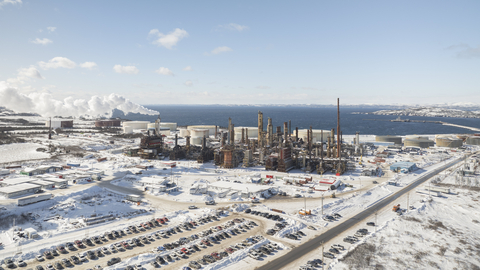
Rhône Energies has entered into exclusive negotiations for the acquisition of the Esso Fos-sur-Mer refinery in southern France

Rhône Energies, a consortium of Entara LLC (“Entara”) and Trafigura Pte Ltd (“Trafigura”), has entered into exclusive negotiations to acquire the Fos-sur-Mer refinery and the Toulouse and Villette de Vienne terminals from Esso. The proposed acquisition is subject to a formal information and consultation procedure with employee representative bodies. Its completion is subject to regulatory approvals and is expected by the end of 2024. The financial terms of the proposed transaction are confidential.

Rhône Energies was formed by Entara and Trafigura to combine the strengths of a proven refinery operator with a global market leader in energy and commodities. Entara was established by former executives of Crossbridge Energy who have a track record of managing and optimising refinery assets, including at the Fredericia refinery in Denmark. Entara will manage the Fos-sur-Mer asset, overseeing operations, maintenance, asset integrity, commercial, health, safety and environmental performance.

Trafigura is one of the world’s largest suppliers of energy and commodities, operating in over 150 countries and trading over 5.5 million barrels of oil and petroleum products every day. Trafigura has a 30-year history of working with refineries through direct investment, capacity utilization and supply and offtake.

“We would be delighted to acquire and assume stewardship of the Esso’s Fos-sur-Mer refinery operations and look forward to engaging with the operational management, employee representatives and government stakeholders over the coming weeks and months to confirm our commitment to the operation and our plans for the future,” said Entara’s CEO, Nicholas Myerson. “We are committed to upholding the operation’s high standards of environmental responsibility, safety, and operational excellence.”

“The Fos-sur-Mer refinery is an efficient, flexible, well-run operation strategically located on France’s Mediterranean coast,” said Ben Luckock, Global Head of Oil for Trafigura. “The refinery will continue to be an important contributor to energy security in the region and would benefit from Trafigura’s global trading and logistics network. Oil and petroleum products will continue to play an important role in supporting growing global energy demand during the transition currently underway to a low-carbon economy.”

Rhône Energies intends to maintain the current workforce with approximately 310 members of staff who will transfer to Rhône Energies on completion of the proposed transaction. The company would also aim to maintain a competitive compensation and benefits programme for the workforce as well as learning and development opportunities.

Under the terms of the proposed acquisition, Trafigura would enter into a minimum 10-year exclusive crude oil supply and product offtake agreement, including ownership of crude oil and product stocks in tank. These agreements would ensure the refinery has a secure supply of on-demand feedstock at competitive costs, and a reliable off-taker of refined products destined to the domestic market. Rhône Energies would agree to continue to supply Esso SAF in the region.

With this proposed acquisition, Rhône Energies plans to capitalize on the refinery’s existing skilled teams and strong manufacturing performance. The company aims to further improve margin capture, crude flexibility, process utilization and to maximize high value products, while investing in personnel and process safety.

Rhône Energies intends to invest in the sustainability of the site to reduce its carbon intensity footprint while also investing in growth projects enabling further co-processing of biogenic feedstocks to produce renewable fuels.

With a crude oil processing capacity of 140 thousand barrels per day, Fos-sur-Mer benefits from direct access to a major port, competitive operating costs and the ability to process a wide range of crude oil feedstocks.

Thursday, 14 March 2024

KBR Awarded Project Management Contract for Sonangol’s New Lobito Refinery Project

KBR announced today it has been awarded a project management contract by Sonangol for the design and construction of a new 200,000bpd refinery in Lobito, Angola.

Under the terms of the contract, KBR will provide services encompassing the project management of engineering, procurement and construction phase execution. The Lobito Refinery Project is one of the most significant energy infrastructure projects in the region and will contribute to Angola’s energy independence. The project will also contribute to significant job creation and economic development of this region. Upon completing the Lobito Refinery Project, Angola is expected to have a 200% increase in the capacity to produce fuel products within the country in an efficient and sustainably improved approach.

This award further extends the more than twenty-year long partnership between KBR and Sonangol in the development of essential natural resources in Angola. KBR completed the FEED phase of the project earlier in 2023, providing a cost competitive design that met Sonangol’s business objectives while meeting the advanced emission standards required in the industry. In line with our strategy in energy transition to provide more environmentally friendly solutions, KBR’s FEED design also meets 2030 African and European Product Specifications with river water consumption and waste-water treatment requirements reduced by 30% as a result of KBR’s innovation in the refinery’s cooling system design.

“We are excited to be a part of this important project and to continue to grow and maintain a substantial presence in the region,” said Jay Ibrahim, President, Sustainable Technology Solutions. “This win is indicative of KBR’s strategic commitment to offer differentiated technical services that support Angola’s sustainable development goals.”

For more than 100 years, KBR has provided holistic and value-added solutions across the entire asset life cycle. Our leading experts have helped design and deliver world-class refinery and petrochemical plants across the globe.

Wednesday, 6 March 2024

bp wants to reposition its refinery in Gelsenkirchen for the future

With its strategy for the German market, bp also wants to drive forward its transformation into an integrated energy company. The refinery in Gelsenkirchen is an important component of this project. By the end of the decade, bp plans to gradually renovate the site so that it can follow the path of the energy transition and exploit its potential.

Currently, our refinery site in Gelsenkirchen is not competitive. We are too complex and – not only because of this – burdened with structurally too high costs. In order to be able to take advantage of the opportunities that arise for our location from the energy transition, we have to change today. We want to give Gelsenkirchen a perspective and greater potential for its contributions to the energy transition.

Arno Appel, head of the refinery in Gelsenkirchen


Refinery: Perspectives through Change and Adaptation

  • In order to make the refineries fit for the future, it is necessary to massively reduce the complexity of the site and to shut down plant components for which capacity utilization is expected to decline in the future – with petrochemical production remaining a core area.
  • For this reason, as a first step, five plants at the Horst and Scholven plants are to be decommissioned as planned from 2025. This could lead to a planned and controlled reduction of the total production capacity – currently around twelve million tonnes of crude oil per year – to around eight million tonnes at the site.
  • With these measures, the site could also reduce its Scope 1 emissions by up to one half a million tons of CO2 per year.
  • In addition, subject to appropriate approvals, bp plans to enable the production of lower-emission fuels through co-processing at the hydrocracker plant at the Gelsenkirchen-Scholven site, in order to produce, among other things, more sustainable aviation fuels (SAF).1
  • Another perspective for future steps towards the production of more sustainable products is the possibility of establishing a circular economy network at the refinery for its petrochemical plants together with a partner. Only recently, the city council of Gelsenkirchen created the basic prerequisite for this by adapting the development plan accordingly.
The planned focus of the refinery on the future will also have an impact on the organization of work on site. Arno Appel says: "The tasks on site will change in the course of our transformation. We are determined to take as many colleagues as possible with us on this journey. However, it is also true that there will be fewer jobs overall in the refinery of the future in the future. In order to make this change as fair and socially acceptable as possible, we want to start negotiations with the employee representatives as soon as possible."

About the Gelsenkirchen location:
With around 2,000 employees and 160 trainees, bp operates the two plants in Horst and Scholven in Gelsenkirchen as an integrated refinery and petrochemical site. The processing capacity is about twelve million tons of crude oil per year. In addition to gasoline, diesel, jet fuel and heating oil, this results in more than 50 different products, primarily for the chemical industry. In addition to its great importance for the domestic fuel and energy supply, the Gelsenkirchen site also plays an important role in the North Rhine-Westphalia Chemical Network.

Thursday, 15 February 2024

Members of the Moratti family enter into an agreement to sell approx. 35% of Saras to Vitol


Massimo Moratti S.a.p.A. di Massimo Moratti, Angel Capital Management S.p.A. (“ACM”), and Stella Holding S.p.A. (collectively the “Moratti family”) and Vitol B.V., a company based in The Netherlands (or a wholly-controlled entity designated by Vitol), (“Vitol”) have entered into a sale and purchase agreement (the “SPA”) pursuant to which the Moratti family has undertaken to sell to Vitol, shares of Saras S.p.A. (“Saras”) representing approx. 35% of Saras’s corporate capital (the “Transaction”), at a price per share equal to €1.75/share (the “Price per Share”).

Under the SPA and subject to fulfilment of certain circumstances set forth therein, ACM has undertaken to sell to Vitol the shares of Saras (if any) that ACM may be entitled to receive under the existing funded collar derivative contract, covering approx. 5% of Saras’s corporate capital.

If a dividend distribution is resolved and paid by Saras before the closing date of the Transaction, the Price per Share will be reduced accordingly.

Completion of the Transaction is exclusively subject to obtaining the required regulatory approvals (i.e., the clearances under the EU foreign subsidies regulation, the EU antitrust regulation and the Golden Power framework).

Upon the closing, the entire stake owned by the Moratti family in Saras will be transferred to Vitol. This will trigger a mandatory tender offer for the outstanding share capital of Saras, which will be launched by Vitol at the same Price per Share (i.e., €1.75/share), as may be adjusted in case of dividend distribution occurring before closing of the Transaction. The goal of the MTO is to achieve a delisting from the Milan Stock Exchange, which may also be achieved through delisting merger should the required conditions be met.

The price of €1.75/share values the equity of Saras at approximately €1.7 billion and represents a premium of:
  • 10% to the unaffected share price
  • 7% to the unaffected one-month volume-weighted average share price
  • 12% to the unaffected three-month volume-weighted average share price
  • 21% to the unaffected six-month volume-weighted average share price
  • 30% to the unaffected twelve-month volume-weighted average share price

Unaffected price refers to the closing market price as of February 6, 2024 (i.e., the date before the Bloomberg press notice referring to a potential sale by the Moratti family).

Saras is a leading industrial and energy company based in Italy. Its assets include the largest single-site refinery in the Mediterranean. Strategically located on an industrial site in Sardinia, the 300kb/d refinery supplies oil products to Italy and the rest of Europe, while its fully-integrated power generation plant, one of the largest of its kind, has an installed capacity of 575MW and supplies over 40% of Sardinia’s power. In addition, Saras has a significant renewables portfolio comprising 171MW of operational wind assets and a pipeline of 593MW and 79MW of wind and solar projects respectively.

Vitol has a long history of investing in energy infrastructure around the world, from oil production and refineries to renewables and carbon capture. This Transaction presents an opportunity for Vitol to invest in a high-quality asset, well placed to serve both Italy’s and Europe’s current and future energy needs.

Massimo Moratti, Chairman and CEO, Saras said: “62 years after my father founded it, together with my nephews Angelo and Gabriele and my sons Angelomario and Giovanni, I believe that the best assurance for the future success of the Sarroch refinery is the aggregation with a leading player in the global energy sector, such as Vitol, with relational, managerial and financial resources, needed to compete in the current international market environment.

“Therefore, I believe that this transaction will be beneficial for all shareholders, the employees and the customers, as well as all other stakeholders whom I thank for the trust they have always placed in us.

“Today Saras is a solid and profitable company, leader in the entire Mediterranean basin, and we wish Vitol to be able to expand the successes achieved so far.”

Russell Hardy, CEO, Vitol said: “Our ambition is to invest in a strong Italian energy company, run by an empowered local management team and supported by Vitol’s expertise and market reach. We appreciate the significance of Saras within Sardinia, and the country more broadly, and are committed to continuing the Moratti family’s legacy of diligent stewardship, safe operations and support for the local community and employees. Saras’s business is highly complementary to Vitol’s core operations and this transaction will strengthen European energy security and enhance supply for a key European energy asset.”

On completion, Vitol will be invested in over 800kb/d of refining capacity across seven refineries, 4GW of thermal power generation and over 1.4GW of renewable generation.

The Moratti family is advised by BofA Securities and Four Partners Advisory as financial advisors and Linklaters as legal advisor. Vitol is advised by J.P. Morgan as sole financial advisor and by Chiomenti and Weil, Gotshal & Manges as legal advisors.

Monday, 29 January 2024

Eni moves ahead with conversion of the Livorno refinery into a bio-refinery

Today, Eni confirms its decision to build Italy's third bio-refinery in Livorno. The project, first announced in October 2022 and followed by an application for Environmental Impact Assessment (EIA) in November 2022, is awaiting official authorisations and includes the construction of three new facilities for the production of hydrogenated biofuels: a biogenic feedstock pre-treatment unit; a 500,000 tonnes/year Ecofining™ plant; and a facility to produce hydrogen from methane gas.

The conversion of the Livorno industrial site, following other successful conversions in Porto Marghera (2014) and Gela (2019), confirms Eni's decarbonization strategy, which aims to achieve carbon neutrality by 2050 and increase bio-refining capacity from the current 1.65 million tonnes/year to over 5 million tonnes/year by 2030.

In line with the strategic decision to convert the Livorno refinery, future-proofing the site in terms of production and employment, Eni has stopped importing crude oil and initiated the shutdown of the lubricants production lines and Topping plant. Fuel distribution in the area will be guaranteed through the import of finished and semi-finished products.

Preparatory work for the construction of the three new bio-refining plants is underway, with construction to commence following regulatory approval. Completion and commissioning are expected by 2026.

The plants will process various biogenic feedstocks, mainly vegetable waste and residue, to produce HVO diesel, HVO naphtha and bio-LPG. Eni, through Enilive, is the second-largest producer of hydrogenated biofuels (HVO) in Europe and the third-largest in the world.

Eni’s growth strategy is driven by the increasing demand in Europe and Italy for biofuels in the mobility sector, both to meet the emission reduction targets set out in the recently approved RED III (Renewable Energy Directive) and to comply with Italian legislation requiring the introduction of pure biofuels. Forecasts predict a 65% increase in demand for hydrogenated biofuels globally between 2024 and 2028.

Friday, 26 January 2024

Shell invests to repurpose German Energy and Chemicals Park Rheinland

Shell Deutschland GmbH has taken a final investment decision (FID) to convert the hydrocracker of the Wesseling site at the Energy and Chemicals Park Rheinland into a production unit for Group III base oils, used in making high-quality lubricants such as engine and transmission oils. Crude oil processing will end at the Wesseling site by 2025 but will continue at the Godorf site.


Huibert Vigeveno, Shell’s Downstream and Renewables Director, said: “The repurposing of this European refinery is a significant step towards serving our growing lubricant customer base with premium base oils. This investment is part of Shell’s drive to create more value with less emissions.”

The high degree of electrification of the base oil plant, as well as the ceasing of crude oil processing into fuels at the Wesseling site, is expected to reduce Shell’s scope 1 and 2 carbon emissions (those which come directly from our operations and those from the energy we buy to run our operations) by around 620,000 tonnes a year. Shell’s target is to become a net-zero emissions energy business by 2050.

The new base oil plant is expected to start operations in the second half of this decade. It will have a production capacity of around 300,000 tonnes a year, equivalent to about 9% of current EU demand and 40% of Germany’s demand for base oils.

Notes to editors:
  • This investment, financed by Shell’s Chemicals and Products business, meets the minimum acceptable internal rate of return set out at our Capital Markets Day in 2023.
  • A hydrocracker converts heavy, low-quality hydrocarbons into lighter, high-quality products, such as fuels (gasoline, jet fuel, diesel), chemicals feedstocks, and base oil feedstocks. This is achieved through a high-pressure, high temperature reaction between the hydrocarbons and hydrogen, in the presence of a catalyst.
  • Group III base oils are mineral base oils with very high viscosity index, produced by hydrocracking technology. The market for high-quality engine and transmission oils, as well as e-fluids and cooling fluids, some of which are made from these base oils, is expected to grow.
  • Shell has already driven forward the transformation of the Energy and Chemicals Park Rheinland with investments in a 10-megawatt electrolyser to produce renewable hydrogen and a biomethane liquefaction plant.
  • Shell’s Energy and Chemicals Park Rheinland is located near Cologne and is comprised of two sites: Wesseling and Godorf. It currently has capacity to process over 17 million tonnes of crude oil a year, of which 7.5 million tonnes are processed at the Wesseling site.
  • Despite ceasing crude oil processing at the Wesseling site, fuel supplies for the German market are expected to remain stable and secure.

Tuesday, 23 January 2024

Topsoe Selected As Technology Provider For Preem’s Renewable Fuels Plant In Sweden

Topsoe, a global technology and solutions provider for the energy transition, has signed a licensing and engineering agreement with Preem, Sweden’s largest fuel company, to produce Sustainable Aviation Fuel (SAF) and renewable diesel, using Topsoe’s HydroFlex™ technology.

The demand for SAF is rapidly growing. According to the International Energy Agency’s Net Zero Scenario, over 10% of fuel consumption in aviation by 2030 needs to be SAF to stay on course for net zero CO2 emissions by 2050. In 2022, the International Air Transport Association estimated global SAF production to make up only around 0.1% to 0.15% of total jet fuel demand.

At Preem’s lysekil refinery in Sweden, Topsoe’s HydroFlex™ technology will be utilized in Preem’s IsoCracker (a unit that breaks down molecules into lighter components. Topsoe will thereby supports Preem’s long-term target of producing five million cubic meters of renewable fuels and achieving a climate neutral value chain by 2035. Once the revamped Lysekil refinery starts operating in 2027, Preem will become one of Northern Europe’s biggest producers of SAF.

The partnership builds on years of cooperation with Preem to produce renewable fuels, including at Preem’s refinery in Gothenburg. Together, Topsoe and Preem will work to increase production of renewable fuels, SAF included.

Elena Scaltritti, Chief Commercial Officer at Topsoe, said:
“Society needs a significant upscaling of renewable fuels for aviation. We’re excited to take another step on the path to reduce carbon emissions in the transportation sector and aviation in particular. Together with Preem, we already have a proven track-record of delivering impactful results within renewable fuels production, and we’re looking forward to continuing working with Preem on this important task.”

Peter Abrahamsson, Director of Sustainable Development at Preem, said:
“We’re thrilled about the revamp of Lysekil refinery, which is one of the most significant climate investments in Sweden. The demand for sustainable aviation fuels is increasing rapidly, and we are already in dialogue with several major airlines. With this investment, Preem takes another decisive step in the transition from fossil to renewable production. We’re happy to continue working with Topsoe on increasing renewable fuels production.”

What is HydroFlex™
With HydroFlex™, customers can convert various fats, oils and greases into drop-in renewable jet and diesel that meet all globally accepted specifications for these fuels. Topsoe’s HydroFlex™ can be deployed in both grassroots units and revamps for co-processing or fully renewable applications.


About Preem
PREEM is Sweden’s largest fuel company. Preem’s refineries in Gothenburg and Lysekil account for about 80 percent of the Swedish refinery capacity and approximately 35-40 percent of the Nordic capacity. Together, they have a total refining capacity of over 18 million cubic meters per year. Our vision is to lead the transition toward a sustainable society. By 2035, Preem has set a goal to produce 5 million cubic meters of renewable fuels, and to achieve climate neutrality across the entire value chain. We refine and sell fuel, heating oil and lubricating oil as well as other products to companies and individuals. Most of our products, almost 60 percent, are exported to nearby markets mainly north-western Europe. We have a nationwide service network with over 500 filling stations for private and commercial traffic. Preem AB has around 1,500 employees, of which 1,100 work at our refineries. In 2022, Preem’s turnover was SEK 161 billion.

Sunday, 21 January 2024

Dangote Refinery Receives Its Maiden Crude Cargo

In a major step towards boosting Nigeria’s domestic refining capacity and attaining energy security (self-sufficiency), Dangote Petroleum Refinery and Petrochemicals plant has purchased 1 million barrels of Agbami crude grade from Shell International Trading and Shipping Company Limited (STASCO), one of the largest trading companies in Nigeria as well as globally, trading over 8 million barrels of crude oil per day.

The STASCO cargo contained 1 million barrels from Agbami and sailed to Dangote Refinery’s Single Point Mooring (SPM) where it was discharged into the refinery’s crude oil tanks.

The maiden 1 million barrels, which represent the first phase of the 6 million barrels of crude oil to be supplied to Dangote Petroleum Refinery by a range of suppliers, should sustain the initial 350,000 barrels per day to be processed by the facility. The next four cargoes will be supplied by the NNPC in two to three weeks and the final of the six cargoes will be supplied by ExxonMobil.

This supply will facilitate the initial run of the refinery as well as kick-start the production of diesel, aviation fuel, and LPG before subsequently progressing to the production of Premium Motor Spirit (PMS).

This latest development will play a pivotal role in alleviating the fuel supply challenges faced by Nigeria as well as the West African countries.

Designed for 100% Nigerian crude with the flexibility to process other crudes, the 650,000 barrels per day Dangote Petroleum Refinery can process most African crude grades as well as Middle Eastern Arab Light and even US Light tight oil as well as crude from other countries.

Dangote Petroleum Refinery can meet 100% of Nigeria’s requirement of all refined products, gasoline, diesel, kerosene, and aviation jet, and also have surplus of each of these products for export.

The refinery was built to take crude through its two SPMs located 25 kilometres from the shore and to discharge petroleum products through three separate SPMs. In addition, the refinery has the capacity to load 2,900 trucks a day at its truck-loading gantries.

Dangote Refinery has a self-sufficient marine facility with the ability to handle the largest vessel globally available. In addition, all products from the refinery will conform to Euro V specifications.

The refinery is designed to comply with US EPA, European emission norms, and Department of Petroleum Resources (DPR) emission/effluent norms as well as African Refiners and Distribution Association (ARDA) standards.

President of Dangote Group, Mr. Aliko Dangote stated: “We are delighted to have reached this significant milestone. This is an important achievement for our country as it demonstrates our ability to develop and deliver large capital projects. Our focus over the coming months is to ramp up the refinery to its full capacity. I look forward to the next significant milestone when we deliver the first batch of products to the Nigerian market.”

Country Chairman of Shell Companies in Nigeria, Mr. Osagie Okunbor stated: “We welcome the startup of a refinery that is designed to produce gasoline, diesel, and low-sulphur fuels for Nigeria and across West Africa and are happy to be enabling it.”

LG Chem and Enilive: a joint venture agreement for the biorefinery in South Korea

LG Chem and Enilive move a further step forward to the final investment decision on the project of a new biorefinery in South Korea by signing the joint venture agreement. The agreement has been signed in Rome by Eni CEO, Claudio Descalzi, and LG Chem CEO, Shin Hak-cheol.

Last September, Enilive (a company directly controlled by Eni, which holds 100% of its share capital) and LG Chem announced they were exploring the possibility to develop and operate a new biorefinery at existing LG Chem’s integrated petrochemical complex in Daesan, South Korea, with the aim to complete the biorefinery by 2026 and to make it process approximately 400,000 tons of renewable bio-feedstocks annually using Eni's Ecofining™ technology and produce multiple products including Sustainable Aviation Fuel (SAF), Hydrotreated Vegetable Oil (HVO), and bio-naphtha. LG Chem and Eni will combine expertise in this initiative. The final investment decision is expected in 2024.

Eni CEO Claudio Descalzi stated: “Biofuel production is one of the main pillars of our strategy to contribute to reach net zero emissions by 2050 also through the sale of increasingly decarbonized products to our clients. The biorefinery project we are working on together with LG Chem is a key element to expand Enilive biorefining presence internationally, to raise its capacity from current 1.65 million tons/year to over 5 million tons/year by 2030 and to increase the optionality of SAF production to up to 2 million tons/year from 2030.”

LG Chem CEO Shin Hak-cheol noted, “This agreement holds significant meaning as it represents the collaboration and joint effort of global leading companies towards the common goal of ‘Net Zero’.” He further stated, “LG Chem will actively support the successful execution of this project and, moving forward, will solidify its position as a leading company in the eco-friendly plastic industry, achieving sustainable development and carbon neutrality as a true global entity.”

Wednesday, 3 January 2024

TotalEnergies signs an agreement to divest its minority stake in Natref refinery to the Prax Group

In line with its strategy to divest non-core assets, TotalEnergies has announced the signature of an agreement to divest the 36.36% minority stake, held by TotalEnergies Marketing South Africa, in National Petroleum Refiners of South Africa (Natref) to the Prax Group. The transaction is subject to customary approvals, consents and authorisations.

Located at Sasolburg (Free State, South Africa), Natref refinery has a capacity of 108 500 barrels of oil per day, supplies the main South African inland market of Johannesburg area and is operated by a Joint Venture between Sasol (63,64%) and TotalEnergies Marketing South Africa.

“The transaction is in line with the Company strategy to focus on its large integrated fuels & petrochemicals platforms and to divest its non-core assets” commented Jean-Pierre Sbraire, Chief Financial Officer of TotalEnergies.

TotalEnergies has been present in South Africa for nearly seventy years, produces and markets a wide range of energies from fuels, biofuels, natural gas and green gases, renewables and electricity and remains committed to its operations in the country.